


A blister on the bottom of the foot can quickly turn everyday movement into a painful experience. Whether it develops after a long walk, a new pair of shoes, or increased physical activity, this common condition can interfere with comfort, balance, and mobility. Many patients ask whether they should leave the blister alone, protect it, or seek medical care, especially when discomfort persists.
We often see blisters that begin as minor irritation but worsen due to continued pressure or delayed care. Understanding why these blisters form, how to manage them safely, and when professional care is appropriate can help prevent complications and support proper healing.
Why Blisters Form on the Bottom of the Foot
The skin on the sole is designed to withstand pressure, but it is still vulnerable to repeated friction. A blister on bottom of foot forms when layers of skin separate due to rubbing, allowing fluid to accumulate between them.
Common Causes
- Friction from footwear: Shoes that are too tight, too loose, or not well-supported
- Repetitive movement: Walking, running, or prolonged standing
- Moisture and heat: Sweat softens the skin, increasing friction
- Sudden activity changes: Increased intensity or duration of movement
Blisters typically appear in high-pressure areas such as the heel, ball of the foot, or toes, especially where skin is repeatedly stressed.
Types of Blisters on the Bottom of the Feet
Not all blisters develop the same way, and recognizing the type can guide appropriate care.
Friction Blisters
The most common blisters on bottom of feet, caused by repeated rubbing against footwear or surfaces.
Small or Early-Stage Blisters
Small blisters on bottom of foot may begin as mild irritation and progress if pressure continues.
Activity-Related Blisters
Blisters on bottom of feet from walking or running often occur during prolonged activity, particularly when footwear lacks proper support or cushioning.
Symptoms and What to Watch For
A blister may begin as mild discomfort but can become more noticeable if not managed properly.
Common Symptoms
- A raised, fluid-filled area
- Redness or irritation around the blister
- Pain or tenderness when walking
- Increased sensitivity in pressure areas
While many blisters on bottom feet heal without complications, changes in appearance or symptoms should be monitored carefully.
How to Treat a Blister on Bottom of Foot Safely
Understanding how to treat a blister on bottom of foot is essential to protect the skin and prevent infection.
When Home Care Is Appropriate
Once a blister has already formed, the focus shifts from prevention to protecting the skin and supporting healing.
For small, intact blisters that are not worsening, conservative care is typically sufficient.
How to Protect the Blister During Healing
- Keep the area clean and dry
- Cover with a protective bandage or dressing
- Reduce direct pressure on the affected area
- Rest as much as possible to avoid further irritation
In these cases, the intact blister acts as a natural protective barrier while the underlying skin repairs.
For more detailed guidance, this resource on safe foot wound care explains how to manage minor injuries effectively at home.
When to Avoid Self-Treatment
Blisters should not be aggressively treated at home if they are:
- Large or severely painful
- Repeatedly exposed to pressure
- Showing signs of infection
- Occurring in patients with diabetes or circulation concerns
In these situations, professional care is the safer approach.
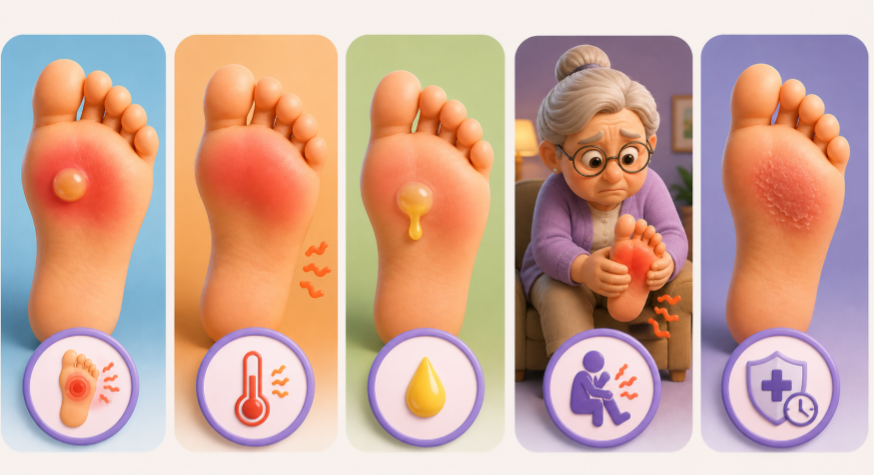
Signs a Blister May Be Infected
Most blisters heal without complications, but when the protective skin barrier is disrupted, bacteria can enter and lead to infection. Recognizing these changes early is key to preventing progression.
Common Indicators of Infection
- Increasing redness that spreads beyond the blister
- Warmth or throbbing sensation in the area
- Drainage, pus, or unusual fluid
- Persistent or worsening pain
- Skin that appears irritated or slow to heal
These changes suggest the blister is no longer healing normally and may require closer monitoring.
Increased Risk for Patients With Diabetes
For individuals with diabetes, even minor blisters on bottom of my feet can pose a higher risk.
Why Extra Caution Is Needed
- Reduced circulation can slow healing
- Peripheral neuropathy may limit awareness of injury
- Increased risk of infection and complications
Clinical data shows that foot wounds in patients with diabetes can progress rapidly if not treated early, sometimes leading to ulcers or deeper tissue involvement. Early monitoring and professional care are essential.
When to Seek Professional Care
Not all blisters require medical attention, but certain situations indicate that home care may no longer be sufficient.
Consider Professional Care If:
- The blister is not improving after a few days
- Walking or daily activity becomes uncomfortable
- The same area continues to develop blisters
- Pressure or friction cannot be effectively reduced
- You are unsure how to safely manage the wound
Prompt Evaluation Is Recommended If:
- Signs of infection are present
- The blister has opened and is not healing properly
- You have diabetes, neuropathy, or circulation concerns
For patients needing structured care, specialized foot wound care services provide treatment focused on healing, pressure relief, and prevention of recurrence.
Preventing Blisters on the Bottom of the Feet
Blisters often develop when repeated friction and pressure are not addressed early. Preventive care focuses on reducing these triggers before the skin becomes damaged.
How to Reduce Friction and Pressure
- Wear properly fitted, supportive shoes
- Use moisture-wicking socks to limit skin softening
- Gradually increase physical activity levels
- Keep feet dry, especially during prolonged activity
- Identify and adjust pressure points early
These strategies help protect the skin from breakdown, especially in high-impact areas like the heel and ball of the foot.
Supporting Healing With Expert Care
A blister on bottom of foot is a common condition, but it should not be overlooked, especially when symptoms persist or risk factors are present. While many cases heal with simple care, others require professional evaluation to prevent complications.
At Allevio Care Anywhere, we provide compassionate, expert in-home podiatry services designed to treat foot conditions safely and effectively. Our approach focuses on early detection, pressure relief, and personalized care, helping patients recover comfortably and reduce the risk of recurrence.
If you are experiencing persistent discomfort or are unsure how to manage a blister safely, you can request an appointment through our contact page to receive in-home care tailored to your needs. We proudly serve patients across Utah, Idaho, Houston, and Nebraska, and you can explore all service areas on our locations page to find care available near you.
Early care, proper protection, and expert guidance can make a meaningful difference in maintaining healthy, comfortable feet.


