


Foot wounds, whether they start as small cuts, blisters, or open injuries, require more care than many people realize. Because the feet are constantly exposed to pressure, friction, moisture, and bacteria, even a minor wound on the foot can become infected or slow to heal if not treated properly.
In this guide, we explain how to perform wound care for feet, when a simple cut on the foot becomes a medical concern, and why expert care is especially critical for people with diabetes, poor circulation, or limited mobility. You’ll also learn when professional podiatric wound care is the safest option for healing and preventing serious complications.
Why Foot Wounds Are Different From Wounds Elsewhere on the Body
The feet are uniquely vulnerable to delayed healing and infection. Unlike wounds on the arms or torso, foot wounds must withstand:
- Constant weight-bearing pressure
- Friction from shoes and socks
- Reduced airflow
- Higher exposure to bacteria and fungi
- Less noticeable pain in people with neuropathy
These factors make foot wound care more complex, and more important, than many people expect.
Research from the International Working Group on the Diabetic Foot and the American Diabetes Association shows that up to 15–25% of people with diabetes will develop a foot ulcer during their lifetime, and that over 80% of diabetes-related amputations are preceded by a foot wound, making early, expert wound care critical.
Common Types of Foot Wounds
Not all foot wounds are the same, and identifying the specific type of injury is essential for choosing the right treatment and preventing complications. Because the feet are exposed to constant pressure, moisture, and bacteria, even seemingly minor wounds can worsen quickly without proper care, especially in older adults or individuals with underlying health conditions.
Below are the most common types of foot wounds and why each requires careful attention.
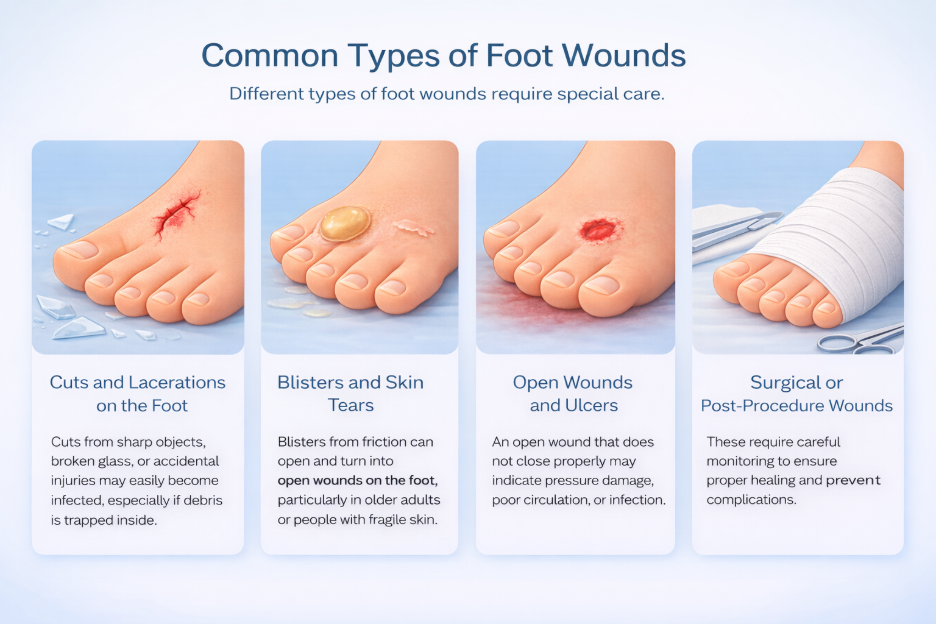
Cuts and Lacerations on the Foot
Cuts on the foot often occur from stepping on sharp objects, broken glass, nails, or household debris. While these injuries may appear superficial at first, the risk of infection is higher than many people realize. Dirt, bacteria, or foreign material can easily become trapped inside the wound, especially if it is not cleaned thoroughly right away.
Foot cuts are particularly concerning because walking places repeated stress on the injured area, which can reopen the wound and delay healing. Without proper wound care, even small cuts can lead to redness, swelling, drainage, or deeper infection that may require medical treatment.
Blisters and Skin Tears
Blisters typically form due to friction from shoes, socks, or repetitive movement. When intact, a blister acts as a protective barrier. However, once it ruptures, it creates an open wound on the foot that is vulnerable to bacteria and infection.
Skin tears are more common in older adults and people with fragile or thinning skin. These injuries may occur with minimal trauma and can worsen quickly if not protected properly. Because blisters and skin tears often develop in high-pressure areas, they can be slow to heal without offloading and appropriate wound management.
Open Wounds and Ulcers
An open wound that does not close within a reasonable timeframe may signal deeper issues such as pressure damage, impaired circulation, nerve damage, or infection. Foot ulcers are especially common in people with diabetes, peripheral artery disease, or reduced sensation in the feet.
These wounds can deepen over time, increasing the risk of serious infection and tissue damage. Early identification and expert foot wound care are critical to prevent progression and long-term complications.
Surgical or Post-Procedure Wounds
Foot wounds following surgery or medical procedures require close monitoring to ensure proper healing. While surgical incisions are carefully managed, they can still be affected by swelling, pressure, or delayed closure, particularly in individuals with diabetes or circulation challenges.
Ongoing professional care helps reduce the risk of infection, wound breakdown, and prolonged recovery. Proper dressing changes, pressure management, and follow-up evaluations are essential for safe healing.
How to Treat a Minor Cut or Wound on the Foot Safely
For very small, superficial wounds, initial care at home may be appropriate only if there are no underlying risk factors, so you could review this blog with more information.
People with diabetes, neuropathy (loss of sensation), poor circulation, or immune conditions should avoid home treatment and seek podiatric care as soon as possible, as even minor foot wounds can worsen quickly without proper medical attention.
Step 1: Clean the Wound Gently
Rinse with clean water or saline to remove debris. Avoid harsh antiseptics like hydrogen peroxide, which can damage healing tissue.
Step 2: Inspect the Area Carefully
Check for redness, swelling, foreign material, or signs of deeper injury.
Step 3: Apply a Protective Dressing
Use a sterile, breathable bandage to keep the wound clean and protected from friction.
Step 4: Reduce Pressure
Avoid tight shoes and limit walking when possible to prevent reopening the wound.
Even with proper care, foot wounds should be monitored closely. If healing stalls or symptoms worsen, professional evaluation is essential.
When a Foot Wound Becomes Serious
Many people underestimate how quickly a foot wound can escalate. Seek professional care if you notice:
- Increasing redness, warmth, or swelling
- Drainage, pus, or foul odor
- Worsening pain or tenderness
- Blackened or discolored skin
- Fever or chills
- A wound that does not improve within a few days
Studies show that nearly 85% of diabetes-related amputations are preceded by a foot wound, underscoring the importance of early intervention and expert care.
Why Diabetic Foot Wounds Require Expert Care
For people with diabetes, even a small cut on the foot can become dangerous due to:
- Reduced sensation (neuropathy)
- Poor circulation
- Slower immune response
- Delayed wound healing
Because pain may be minimal or absent, wounds often go unnoticed until infection has already developed. This is why feet wound care for diabetic patients should never rely on home treatment alone.
Professional podiatric wound care focuses on:
- Proper debridement (removal of damaged tissue)
- Infection prevention
- Pressure relief
- Monitoring circulation and healing progress
If you want to understand the full scope of professional care options, Allevio Anywhere provides comprehensive in-home foot wound care services designed specifically for high-risk patients.
The Role of Podiatrists in Foot Wound Care
A podiatrist does far more than clean and bandage a wound. Expert foot wound care includes:
- Accurate wound assessment
- Identifying pressure points or footwear issues
- Evaluating circulation and nerve health
- Preventing recurrence
- Coordinating advanced care when needed
For a deeper look at how proper wound management improves healing and reduces complications, you may find our guide on essential steps to heal foot wounds faster and prevent complications helpful.
Why Expert, In-Home Wound Care Makes a Difference
Receiving wound care at home offers several important benefits:
- Reduced infection exposure
- Improved comfort and compliance
- Better monitoring for mobility-limited patients
- Consistent follow-up and continuity of care
For older adults, diabetic patients, or those with limited mobility, in-home podiatric care can significantly improve outcomes and reduce hospital visits.
When to Seek Professional Foot Wound Care Immediately
Do not wait if:
- You have diabetes or circulation problems
- The wound is open, deep, or draining
- Healing is slow or stalled
- You cannot safely reach or inspect the wound
- You notice signs of infection
Early intervention is the most effective way to prevent serious complications, and expert care is the safest path forward.
Final Thoughts
Foot wounds may seem small, but they can carry serious risks if not treated correctly. Whether you’re dealing with minor cuts on the foot or a more complex open wound on the foot, proper care, early evaluation, and professional support are essential, especially for high-risk individuals.
Allevio Care Anywhere provides compassionate, expert wound care for feet directly in the comfort of your home, ensuring your injury receives the attention it deserves.
If you or a loved one needs professional foot wound care, Schedule a visit with Allevio Care Anywhere today to protect your health and support safe healing. We proudly provide in-home podiatry services across the Greater Houston area, Utah, Southern Idaho, and Nebraska.


