


Changes in your toenails such as thickening, discoloration, or brittleness can be easy to overlook. For individuals living with diabetes, however, these changes may signal more than a cosmetic concern. Many patients wonder whether these early signs are harmless or if they require attention. Understanding diabetic nails is essential for protecting foot health and preventing avoidable complications.
Because diabetes can affect circulation, nerve function, and the body’s ability to heal, even subtle nail changes deserve careful monitoring. With early recognition and appropriate care, many issues can be managed before they progress into infections, ulcers, or more serious conditions.
How Diabetes Affects Nail Health
Diabetes influences multiple systems that directly impact nail growth and structure. These changes often develop gradually but can increase vulnerability to complications.
Reduced Circulation
Chronic high blood sugar can impair circulation, particularly in the lower extremities. This reduces the delivery of oxygen and nutrients to the nail and surrounding tissue, leading to:
- Slower nail growth
- Thickened or brittle nails
- Increased susceptibility to pressure-related damage
Poor circulation also contributes to delayed healing, meaning even minor nail injuries may take longer to recover.
Nerve Changes (Peripheral Neuropathy)
Peripheral neuropathy is a common complication of diabetes. When sensation is diminished, patients may not notice:
- Pressure from tight or poorly fitting shoes
- Early irritation around the nail
- Minor cuts, blisters, or injuries
As a result, nail and skin problems can progress without detection, increasing the risk of infection and more serious complications.
Increased Risk of Infection
Individuals with diabetes are more susceptible to fungal and bacterial infections. Changes in nail structure, combined with immune system challenges, make diabetic toenails particularly vulnerable.
Common signs of infection include:
- Yellow, brown, or white discoloration
- Thickened or distorted nails
- Crumbling or brittle edges
Fungal infections alone affect a significant portion of older adults and are more persistent in individuals with diabetes, often requiring targeted treatment.
Early Signs of Diabetic Nails
Recognizing early changes is key to preventing complications. The first stage diabetes toenails may present with subtle but meaningful differences.
Common Early Symptoms
- Mild discoloration or dullness
- Slight thickening or uneven texture
- Brittle or fragile nails
- Slower-than-normal nail growth
- Changes in nail shape
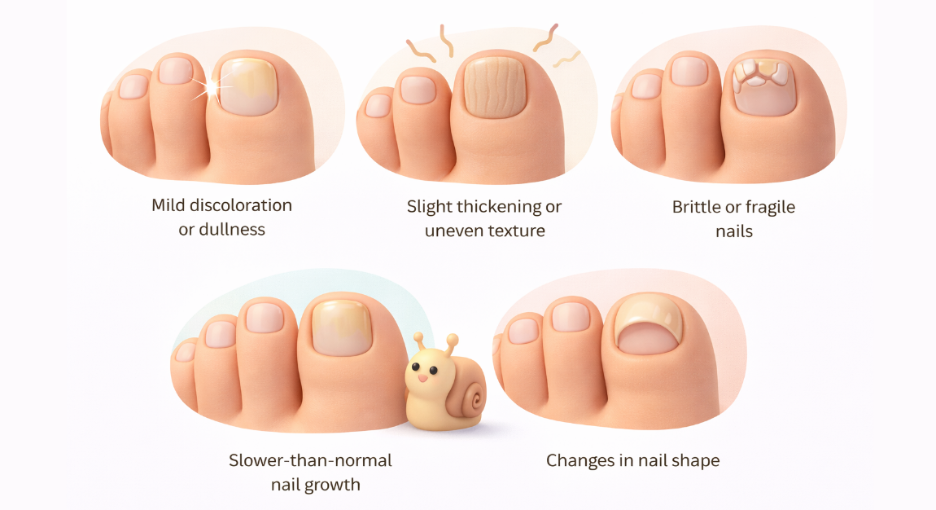
3D illustration showing early signs of diabetic nails, including discoloration, thickening, brittleness, slow growth, and shape changes.
These symptoms may not cause pain, which is why routine foot checks are essential, especially for patients with reduced sensation.
For practical guidance on daily prevention, this resource on diabetic foot care at home outlines simple steps that can help reduce risk and support early detection.
More Concerning Nail Changes
While some changes are mild, others require prompt evaluation.
Black Toenail and Diabetes
A black toenail and diabetes can result from pressure, trauma, or bleeding beneath the nail. However, in individuals with diabetes, it may also reflect:
- Circulatory concerns
- Repeated unnoticed pressure
- Delayed healing
Any unexplained dark discoloration should be assessed, particularly if it develops without a clear cause.
Signs That Should Not Be Ignored
Seek professional evaluation if you notice:
- Sudden or worsening discoloration
- Nail lifting from the nail bed
- Redness, swelling, or drainage
- Pain around the nail
- Nails that become too thick to trim safely
These symptoms may indicate infection or underlying complications that require medical attention.
Common Nail Conditions Linked to Diabetes
There are several conditions commonly associated with nails and diabetes, many of which benefit from early intervention.
Fungal Nail Infections
Fungal infections are among the most frequent causes of nail changes. They often begin gradually but can worsen over time if untreated.
Professional nail treatment services can help manage thickened or infected nails safely, reducing pressure and preventing further complications.
Ingrown Toenails
Changes in nail shape or improper trimming can cause the nail to grow into the surrounding skin. For individuals with diabetes, even a mild ingrown nail can lead to infection if not properly treated.
Thickened or Deformed Nails
Thickened nails can create pressure inside footwear, increasing the risk of:
- Skin irritation
- Callus formation
- Wound development
Routine care is essential to prevent these secondary issues.
When At-Home Care May Be Appropriate
In early or mild cases, supportive care at home can help maintain nail health.
Safe Preventive Practices
- Inspect feet and nails daily
- Keep nails clean and dry
- Wear properly fitted, supportive shoes
- Avoid walking barefoot
However, caution is critical. Individuals with diabetes, especially those with neuropathy or poor circulation, should avoid aggressive trimming or self-treatment of thickened nails.
When Professional Care Is Necessary
It is recommended that individuals with diabetes always receive specialized care from a foot and ankle specialist to mitigate risks. However, professional care is essential when symptoms persist, worsen, or present risk factors for complications.
Seek care if:
- Nails become thick, discolored, or difficult to manage
- Signs of infection appear
- There is pain, swelling, or drainage
- You are unable to safely trim your nails
- You have diabetes with reduced sensation or circulation
Regular evaluations are especially important for high-risk patients. This guide on podiatrists and diabetes explains how routine foot care helps prevent complications and supports long-term health.
For patients needing ongoing support, specialized diabetic foot management services provide comprehensive care focused on prevention, monitoring, and treatment.
Why Early Care Makes a Difference
Timely care can significantly reduce the risk of complications. Research shows that individuals with diabetes have a lifetime risk of foot ulcer development of approximately 15%, as reported in clinical studies published in the Journal of the American Medical Association.
Early intervention helps:
- Prevent infections from spreading
- Reduce pressure and discomfort
- Protect surrounding skin and tissue
- Avoid progression to ulcers or more serious conditions
Delaying care can allow small issues to become more complex and harder to treat.
Supporting Nail Health With Compassionate, Expert Care
Understanding the connection between diabetes and nail problems empowers patients and caregivers to take proactive steps toward prevention and treatment. While many nail changes begin subtly, early attention can make a meaningful difference in long-term outcomes.
Allevio Care Anywhere provides compassionate, expert in-home podiatry services designed to support individuals managing diabetic foot and nail health. Their team focuses on early detection, personalized care, and safe treatment, helping patients maintain comfort and reduce risk in the familiarity of home.
If you or a loved one are noticing changes in nail appearance, you can request an appointment through the contact page to receive professional in-home care tailored to your needs. Allevio Care Anywhere proudly serves patients across Utah, Idaho, Houston, and Nebraska, you can explore all service areas on our locations page to find care near you.
Early, expert care is one of the most effective ways to protect foot health, prevent complications, and support long-term well-being.


