


A cracked toenail may look small, but it can quickly become uncomfortable, painful, or vulnerable to infection. Whether you're dealing with a tiny foot nail crack, a deep vertical crack in the toenail, or nails that break again and again, these symptoms almost always signal an underlying issue with the nail structure, moisture balance, or overall foot health.
This guide explains what causes cracked toenails, why weak nails tend to split or peel, and how to fix cracked nails safely without worsening the damage. You’ll also learn when to seek podiatric care for ongoing nail problems, especially if cracks continue to return.
Why Are My Toenails Cracking? Understanding the Most Common Causes
Toenails are designed to protect the toes, but they are constantly exposed to friction, pressure, moisture changes, and trauma. Cracks develop when the nail plate becomes weak, dehydrated, or structurally compromised.
1. Dryness and Dehydration of the Nail Plate
One of the leading reasons nails with cracks appear is simple dryness. When nails lose moisture, they lose flexibility and brittle nails crack under even mild pressure.
Common contributors include:
- Harsh soaps or cleansers
- Cold and dry environments
- Frequent exposure to water
- Aging
- Long-term nail polish use or removers
Dry, brittle nails are also more vulnerable during pedicures. If you’ve ever wondered how salon products or polish impact nail health, you may find it helpful to read our educational guide on safe nail care and the truth about fungus in nail polish, which explores how certain habits contribute to cracking and fungal risk.
2.Trauma and Repetitive Pressure
Even minor trauma can cause a crack in the toenail, especially if shoes are tight or impact is repetitive. Common triggers include:
- Running or high-impact exercise
- Stubbing the toe
- Dropping objects on the toe
- Footwear that presses on the nail
- Long toebox compression during daily activity
This type of injury often results in partial splits or vertical cracks in toenails, which may worsen as the nail grows out.
3.Toenail Fungus
Fungal infections weaken nails from within. Over time, fungus can cause:
- Brittle texture
- Reduced thickness or excessive thickening
- Yellow or cloudy discoloration
- Crumbling edges
- Progressive cracking
If fungus is present, no amount of trimming or moisturizing will stop the nail from splitting until the infection is treated.
4. Weak Nails From Nutrient Deficiency
Toenails require vitamins, minerals, and protein to stay strong. Deficiencies—especially in iron, biotin, protein, zinc, or vitamin D can cause nails to thin, peel, and split.
These internal causes often create chronic cracking or nails that appear soft, weak, or structurally thin.
5. Medical Conditions That Affect Nail Strength
Certain conditions interfere with nail growth or structure and increase the likelihood of repeated cracking:
- Psoriasis or eczema
- Thyroid disorders
- Diabetes
- Peripheral vascular disease
- Autoimmune conditions
If you notice persistent, unexplained cracking alongside skin, circulation, or metabolic symptoms, a podiatrist can evaluate underlying causes.
6. Improper Nail Trimming or Pedicure Damage
Nails that are cut too short, filed aggressively, or trimmed at an angle can split as they grow. Overly aggressive cuticle trimming or pushing can also destabilize the nail plate.
This is why safe, gentle nail care routines and choosing nail salons that follow proper hygiene protocols are so important.
Types of Toenail Cracks and What They Mean
Not all cracks behave the same. Identifying the pattern helps determine the right treatment approach.
1. Vertical Cracks in Toenails
These are long, narrow splits running from the nail tip toward the cuticle (or vice versa). They typically form due to dryness, trauma, or weak nail matrix growth. Vertical cracks are more likely to deepen with pressure or improper trimming.
2. Horizontal or Partial Nail Splits
These cracks run across the nail and often follow a sudden injury. They can cause partial lifting of the nail and may expose the nail bed, increasing infection risk.
3.Repeated Cracking or Nails That “Keep Breaking”
If your nails repeatedly split or break, the cause is usually chronic:
- Nutrient deficiency
- Long-term fungal infection
- Poor circulation
- Flat feet altering pressure patterns
- Chronic friction from footwear
- Frequent chemical exposure
How to Fix Cracked Nails Safely
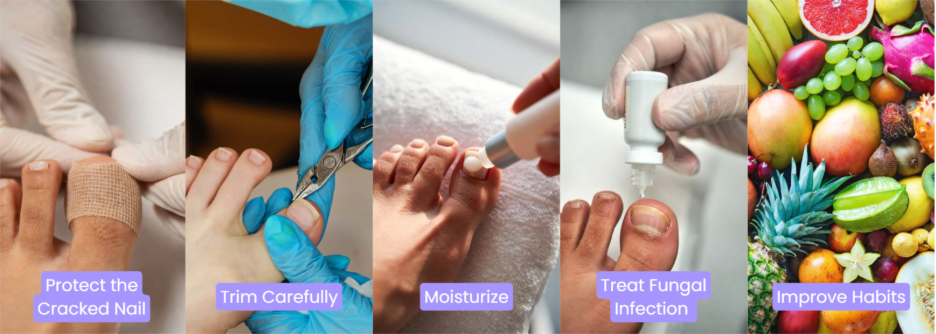
Healing a cracked toenail requires both protection and addressing the underlying cause. Avoid peeling or ripping the crack; this almost always makes the nail split deeper.
1.Keep the Nail Protected But Avoid Acrylics or Harsh Glues
A temporary nail wrap or medical adhesive can stabilize the crack. Avoid:
- Super glue
- Acrylic nails
- Tight nail wraps
- Anything that traps moisture
Your podiatrist can apply a medical-grade nail repair material that allows the nail to grow safely.
2.Trim Carefully (or Let a Professional Do It)
Trimming can prevent snagging, but it must be done safely:
- Trim straight across
- Avoid cutting into the crack
- Don’t pull or peel loose nail sections
- Keep the nail long enough to protect the toe
If the crack is deep, painful, or lifting, a podiatrist can perform precise nail care to protect the nail bed.
3. Moisturize Daily With Nail-Safe Products
Use emollients or urea-based moisturizers to hydrate the nail plate and improve flexibility. Soft nails resist cracking better than dry ones.
4. Treat Any Fungal Infection
If fungus is present, treatment options include:
- Prescription antifungal topicals
- Oral medication (for moderate or severe cases)
- Professional nail debridement
- Combination treatments
Cracks won’t fully heal until fungal damage is addressed.
5.Support Nail Strength From the Inside Out
For nails weakened by diet or health conditions, supportive habits can help:
- Increase protein intake
- Speak with your provider about biotin or vitamin D
- Address low iron or zinc
- Stay hydrated
A stronger nail matrix produces smoother, healthier new growth.
6.When Structural Nail Damage Requires Professional Repair
Deep cracks, splits into the nail bed, or nails that lift from the skin need medical attention. A podiatrist can:
- Stabilize the nail
- Prevent infection
- Remove damaged nail if needed
- Treat inflammation
- Identify underlying medical conditions
This prevents worsening cracks and supports healthier regrowth.
When to See a Podiatrist for Cracked Toenails
You should schedule an evaluation if:
- The crack is deep or painful
- The nail is lifting or separating
- Cracks continue returning
- You suspect fungus
You have diabetes or neuropathy
- The nail is bleeding or swollen
- The nail is splitting in multiple directions
Persistent cracking often indicates underlying causes that require targeted treatment. And if you’ve been wondering whether salon products, pedicure tools, or nail polish microbes contribute to cracking, our educational guide on safe nail care and polish hygiene offers helpful insight into how these factors influence long-term nail health.
Final Thoughts
A cracked toenail may seem minor, but it can reveal deeper issues with moisture balance, nail strength, pressure, fungal infections, or systemic health. With the right care plan—and the right diagnosis, you can protect your nails, prevent future cracks, and promote healthier regrowth.
If your toenails are cracking, splitting, or painful, professional in-home podiatric care is available.
Book your in-home visit with Allevio Care Anywhere by scheduling online through our secure contact page.


