


Corn on the pinky toe can be one of the most uncomfortable foot problems, especially when shoes rub against the side or when the toe presses tightly against its neighbor. Whether you’re dealing with a hard corn, a soft corn, or a pinky toe callus, these small lesions can cause sharp pain, burning, and irritation that make even the shortest walk feel difficult.
This guide explains why corns form on the pinky toe, how to tell whether you’re dealing with a corn or a callus, the safest ways to remove them, and the best strategies to prevent them from coming back.
Why Do Corns Form on the Pinky Toe?
Corns develop when the skin protects itself from constant friction or pressure. The pinky toe is especially vulnerable because it sits at the outermost edge of the foot—where tight shoes, rubbing, and toe deformities add constant stress.
Common Causes
Tight or Narrow Shoes
Pointed or narrow footwear squeezes the pinky toe into the side of the shoe, leading to hard corns on the outer edge.
Toe Alignment and Foot Shape
Curved pinky toes, overlapping toes, or hammertoes increase friction, causing a painful corn on the pinky toe to develop quickly.
Soft Corns Between the Toes
When moisture and pressure combine between the 4th and 5th toes, a rubbery, tender corn can form, often misunderstood as an infection.
Repetitive Pressure
Walking long distances, running, or wearing unsupportive shoes can worsen rubbing on the toe.
If you want a deeper understanding of how different types of corns behave, not just on the pinky toe but across the entire foot, our educational breakdown on types of corns and how to identify them offers helpful visual and diagnostic guidance to complement this article.
Corn vs. Callus: How to Tell the Difference
Identifying whether you have a pinky corn or a callus helps determine the right treatment.
Corn
- Smaller and deeper
- Often painful to pressure
- Has a firm central core
- Can appear on top, between, or on the outer edge of the pinky toe
Callus
- Broader and more superficial
- Usually painless or mildly tender
- Forms from continuous pressure on a wider area
A corn generally feels like “a pebble stuck under the skin,” while a callus feels more like thick, rough buildup.
How to Remove a Corn on the Pinky Toe Safely
If you're wondering how to remove a corn on the pinky toe or how to get rid of a pinky toe corn without causing more pain, the key is gentle care, not cutting, scraping, or using harsh OTC acid pads.
Note: If you have diabetes, nerve damage, circulation problems, or decreased feeling in your feet, avoid self-treating corns. Even minor skin damage can lead to complications, so professional foot care is strongly recommended.
1. Soak and Soften the Skin
Warm water softens the hardened layer, making it easier to thin safely.
2. Use a Gentle Pumice Stone
After soaking, lightly buff the surface. Stop if it becomes painful.
3. Apply a Urea-Based Moisturizer
These creams soften thickened skin and reduce buildup over time.
4. Relieve Pressure Immediately
Switch to shoes with a wider toe box, or use toe spacers to reduce rubbing.
5. Avoid Acid-Based OTC Corn Pads
These can damage healthy skin, especially on the small pinky toe.
6. See a Podiatrist for Professional Removal
Deep or recurrent corns often require medical debridement for lasting relief.
Soft Corns Between Toes: A Special Case
A soft corn forms between the pinky toe and the 4th toe, where moisture collects and friction is constant. These corns:
- Feel tender or wet
- Look white or rubbery
- Can be extremely painful in shoes
Treatment often includes toe separators, moisture control, and sometimes medical trimming if the corn keeps returning.
When to See a Podiatrist
You should schedule a professional evaluation if:
- The corn causes sharp pain
- Walking becomes difficult
- The area turns red or swollen
- The corn returns repeatedly
- You suspect a soft corn between the toes
- You have diabetes or circulation issues
A podiatrist ensures the corn is removed safely and identifies the underlying pressure or alignment issue that caused it.
Many patients feel relief immediately after treatment, especially when the painful central core is removed correctly by a specialist. If you prefer care that comes directly to your home, Allevio Care Anywhere is designed to provide expert, gentle podiatric treatment in the place you’re most comfortable.
How to Prevent Corns on the Pinky Toe
Long-term prevention focuses on reducing pressure and improving foot mechanics.
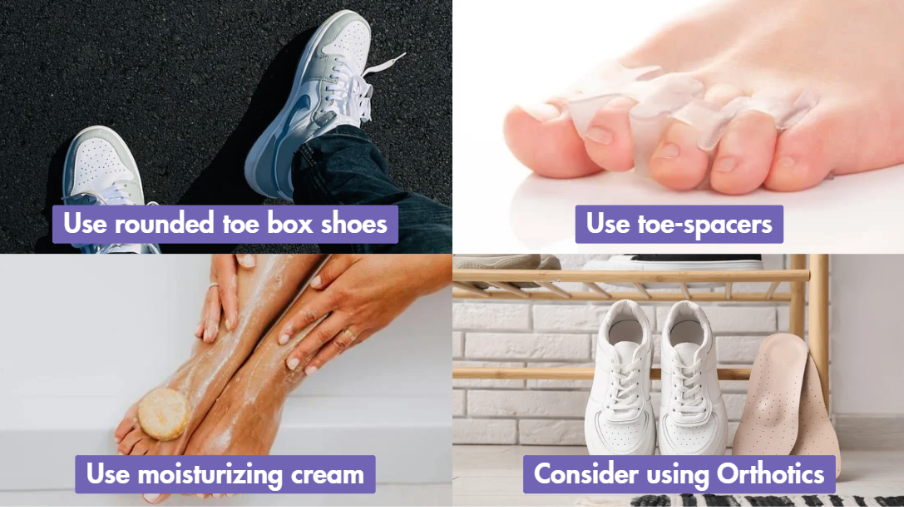
Choose Better-Fitting Shoes
Look for a wide, rounded toe box to prevent compression.
Use Protective Pads or Toe Sleeves
These reduce rubbing from shoes or adjacent toes.
Address Toe Deformities
Orthotics or toe spacers can help correct pressure imbalance.
Moisturize the Feet Daily
Healthy skin is less prone to thickening and friction buildup.
Rotate Shoes
Wearing the same tight or worn-out shoes daily increases risk.
Final Thoughts
Corns on the pinky toe may be small, but the discomfort can be significant, especially with hard corns, soft corns, or recurring pressure points. Fortunately, with the right care and preventive steps, most corns are highly treatable and preventable.
If you need professional help or would like a gentle, convenient at-home option, schedule your visit today with Allevio Care Anywhere that offers compassionate podiatric care designed to relieve pain and keep you moving comfortably.


