


Corns might seem like a small issue, but for many people, especially seniors or those with chronic conditions like diabetes they can become a painful and persistent problem. Understanding the types of corns on feet, their causes, and the safest ways to treat them is essential to maintaining healthy, pain-free movement.
In this guide, we’ll cover the three main types of corns, hard corns, soft corns, and seed corns, plus their symptoms, treatments, and prevention tips. You’ll also learn when it’s time to seek professional podiatric care for lasting relief.
What Are Corns and Why Do They Form?
Corns are areas of thickened skin that develop when repeated friction or pressure irritates the skin over bony areas of the foot. They’re a natural defense mechanism, your body’s way of protecting itself from constant rubbing.
However, when that protective layer thickens too much, it presses inward and becomes painful.
Common Causes of Corns Include:
- Tight or narrow shoes that squeeze the toes
- High heels that shift pressure to the front of the foot
- Abnormal foot mechanics (like bunions or hammertoes)
- Walking barefoot on hard surfaces
- Poor circulation or neuropathy
Corns are often mistaken for calluses, but the difference is simple: calluses form on weight-bearing areas like the soles, while corns appear on non-weight-bearing areas such as the tops or sides of toes and usually have a hard center surrounded by inflamed skin.
For a more detailed comparison, you can read our related article: Warts, Calluses, and Corns: How to Tell the Difference and Treat Them
The Main Types of Corns on Feet
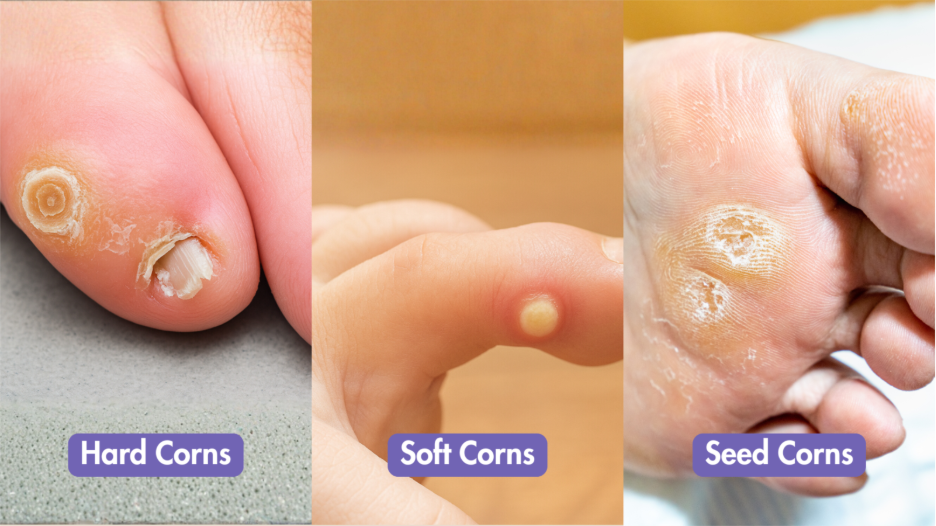
There are three primary types of corns on feet: hard corns, soft corns, and seed corns. Recognizing which one you have helps you find the most effective treatment.
1. Hard Corns (Heloma Durum)
Hard corns are the most common type. They usually form on the tops or sides of toes or on areas where a bone rubs against tight shoes.
Characteristics:
- Firm, dense, and dry
- Yellowish or grayish in color
- Painful when pressure is applied
- Surrounded by inflamed skin
Common Causes:
- Ill-fitting or narrow shoes
- High heels
- Walking or running with uneven gait patterns
Treatment for Hard Corns:
- Soak your feet in warm, soapy water for 10–15 minutes to soften the corn.
- Gently exfoliate using a pumice stone (avoid aggressive scraping).
- Use non-medicated corn pads or moleskin to cushion pressure points.
- Switch to shoes with a wide toe box and soft lining.
- Never cut or shave a corn yourself, this can cause infection.
If a hard corn continues to hurt or returns often, a podiatrist can safely remove it and evaluate if your walking pattern or footwear is contributing to the problem.
2. Soft Corns (Heloma Molle)
Soft corns develop between the toes, particularly between the 4th and 5th toes, where the skin stays moist from sweat or poor ventilation.
Characteristics:
- White or grayish and soft to the touch
- May appear rubbery or spongy
- Often painful or tender when squeezed
- Sometimes emits an odor if infection develops
Common Causes:
- Toes rubbing together inside tight shoes
- Excess moisture from sweat
- Poor foot hygiene or trapped water
Treatment for Soft Corns:
- Keep the area clean, dry, and ventilated.
- Use toe separators or cotton padding to reduce friction.
- Apply antifungal or antibacterial powder if needed.
- Wear breathable, moisture-wicking socks and properly fitted shoes.
If the corn becomes red, swollen, or infected, schedule a professional podiatric evaluation. A podiatrist can debride the area and prescribe targeted medication for relief.
3. Seed Corns (Heloma Millare)
Seed corns are small, round corns that often appear on the bottoms of the feet—particularly around the heel or ball. Though tiny, they can cause sharp discomfort when walking.
Characteristics:
- Small, pinpoint-sized bumps that may occur in clusters
- Often found on dry or rough skin
- May cause a burning or tender sensation under pressure
Common Causes:
- Dry skin or blocked sweat ducts
- Walking barefoot on hard surfaces
- Improper shoe cushioning or thin soles
Treatment for Seed Corns:
- Exfoliate gently with a pumice stone or foot file.
- Apply a daily moisturizer with urea or lactic acid to soften thickened skin.
- Wear cushioned shoes or padded insoles.
- Seek professional removal if they become painful or chronic.
When to See a Podiatrist
Most mild corns can be managed at home, but recurring, painful, or infected corns require medical attention. You should see a podiatrist if:
- You experience persistent pain or swelling.
- The corn becomes red or shows signs of infection.
- You have diabetes, neuropathy, or circulation problems.
- Corns return frequently despite home care.
A podiatrist will remove corns safely and help identify underlying causes such as bone alignment, gait issues, or footwear habits that contribute to pressure buildup.
How to Prevent Corns from Forming
Preventing corns is easier than treating them. A few simple steps can help protect your feet:
1. Choose Proper Footwear
- Wear shoes with a roomy toe box and good arch support.
- Avoid high heels and narrow designs that squeeze the toes.
2. Keep Feet Clean and Moisturized
- Wash and dry your feet daily, especially between toes.
- Use a rich foot cream to prevent dryness and friction.
3. Use Protective Pads or Insoles
- Cushion bony areas or pressure points with silicone or gel pads.
- Consider custom orthotics if you have chronic friction issues.
4. Trim Toenails Properly
- Cut nails straight across to prevent them from pressing into shoes.
5. Schedule Routine Foot Care
- Especially important for seniors and individuals with diabetes or vascular issues. Regular podiatric visits can help catch small issues before they become major problems.
Professional Treatment and Long-Term Relief
When at-home remedies aren’t enough, podiatric care provides both immediate relief and long-term prevention. At Allevio Care Anywhere, our licensed providers specialize in safe, in-home care so you can receive expert attention without leaving your house or care facility.
Our treatments include:
- Medical removal of corns and calluses using sterile tools
- Analysis of gait and foot structure
- Recommendations for proper footwear or orthotics
- Ongoing monitoring for patients with diabetes or circulation issues
We proudly serve patients across the Greater Houston area, Utah, Southern Idaho, and Nebraska, bringing professional, personalized care directly to your doorstep.
Why Early Treatment Matters
A corn that starts small can become a big problem especially for individuals with underlying conditions that affect healing. Left untreated, corns can lead to open sores, infections, and even ulcers.
Early intervention keeps your feet healthy, your mobility strong, and your daily comfort intact.
Final Thoughts: Healthy Feet Begin with Awareness
Corns are more than just a cosmetic concern they’re a signal that your feet are under too much stress. By understanding the types of corns on feet, you can take preventive action, treat them safely, and avoid complications.
If your corns are painful, infected, or keep coming back, don’t wait for them to worsen. Schedule professional podiatric care today.
At Allevio Anywhere, our experienced podiatrists deliver expert in-home foot care across Texas, Utah, Idaho, and Nebraska, helping you walk comfortably, confidently, and without pain.


