


Ingrown toenails are typically known for causing sharp pain, redness, and swelling around the edge of the nail. However, some patients notice something unexpected: numbness, tingling, or a burning sensation in the affected toe. These unexpected sensations often leave patients wondering whether an ingrown toenail could be affecting the nerves in the toe.
While numbness is not the most common symptom, it can occur in certain situations. When inflammation, infection, or pressure develops around the nail, nearby nerves may become irritated. In other cases, symptoms such as tingling or reduced sensation may indicate an underlying issue affecting the nerves or circulation in the foot.
Understanding why these sensations occur and when they require professional care is especially important for older adults, people with diabetes, and individuals with circulation problems. Early evaluation by a podiatrist helps prevent minor nail problems from becoming more serious complications.
What Happens When a Toenail Becomes Ingrown?
An ingrown toenail occurs when the edge of the nail grows into the surrounding skin instead of over it. This most often affects the big toe but can develop in any toe.
The condition typically begins with irritation along the nail border. As the nail continues pressing into the skin, inflammation increases and the area may become swollen or infected.
Common symptoms include:
- Pain or tenderness along the nail edge
- Redness and swelling
- Increased sensitivity when walking or wearing shoes
- Drainage or infection in more advanced cases
Although pain is the most recognizable symptom, some patients also report ingrown toenail numbness or unusual nerve sensations around the toe.
Can Ingrown Toenails Cause Numbness?
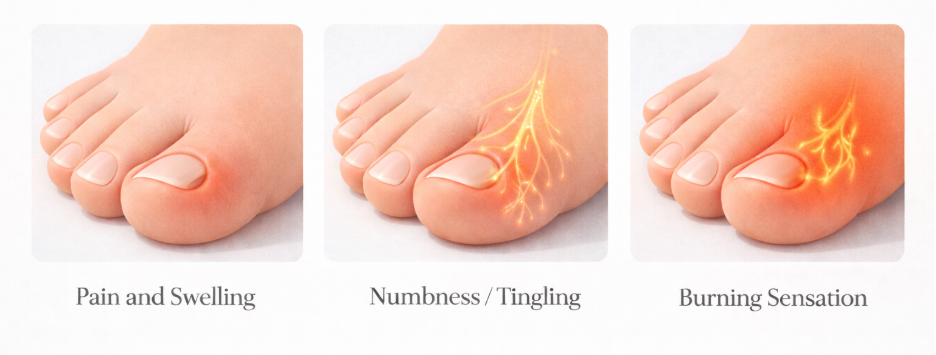
Although not the most common symptom, swelling and inflammation from an ingrown nail can sometimes irritate nearby nerves and alter sensation in the toe.
The toes contain many small nerve endings responsible for detecting touch, pressure, and temperature. When inflammation compresses these nerves, the signals they send to the brain may become altered.
As a result, patients may experience:
- Tingling or “pins and needles” sensations
- Reduced feeling in part of the toe
- A toenail burning sensation
- Intermittent numbness
These symptoms may improve once the ingrown nail is treated and inflammation decreases.
How Inflammation and Pressure Affect Nerves
The primary reason numbness may occur with an ingrown toenail is increased tissue pressure. As swelling develops around the nail fold, the surrounding skin becomes tight, which can temporarily irritate nearby nerves.
Nerve irritation may create sensations such as:
- Burning
- Tingling
- Mild numbness
- Hypersensitivity to touch
Although temporary nerve compression is usually reversible, prolonged inflammation may worsen symptoms if the ingrown nail is left untreated.
Infection Can Increase Nerve Irritation
If bacteria enter the broken skin near the nail, infection may develop. Infected ingrown toenails often cause more significant swelling, which can intensify nerve irritation.
Warning signs of infection include:
- Increased redness
- Warmth around the toe
- Pus or drainage
- Severe tenderness
- Skin discoloration
In these situations, symptoms such as numbness or a toenail burning sensation should be evaluated promptly.
For patients wondering whether the problem might resolve on its own, our guide explaining Do Ingrown Toenails Go Away on Their Own? What You Need to Know About Healing and Risks discusses when observation is reasonable and when professional care is necessary.
Higher Risk for People With Diabetes or Circulation Problems
For healthy individuals, temporary nerve irritation is the most likely explanation for ingrown toenail numbness. However, the situation becomes more complex in people with underlying health conditions.
Diabetes and Nerve Damage
Diabetes is one of the most important risk factors affecting foot health. Studies show that up to 50% of people with diabetes develop peripheral neuropathy, a condition that damages nerves in the feet and legs.
Because neuropathy reduces sensation, patients may not notice an ingrown nail developing. By the time symptoms appear, inflammation or infection may already be present.
In these patients, even minor nail conditions should be evaluated early.
Circulation Issues and Delayed Healing
Poor circulation also increases risk. Reduced blood flow slows healing and weakens the body’s ability to fight infection.
For individuals with peripheral artery disease or other vascular conditions, untreated ingrown toenails may progress more quickly into infections or ulcers.
When Numbness or Burning Signals a More Serious Problem
Although mild tingling may occur with inflammation, persistent symptoms should not be ignored.
Seek professional care if you notice:
- Numbness extending beyond the toe
- Severe swelling or redness
- Drainage or signs of infection
- Skin discoloration or darkening
- Fever or worsening pain
For individuals with diabetes, any change in sensation, especially numbness, should be evaluated promptly to prevent complications.
When Home Care May Help
In very mild cases, early-stage ingrown toenails may respond to simple supportive measures such as:
- Wearing open or wider footwear
- Keeping the area clean
- Reducing pressure on the toe
However, attempting to cut into the nail or remove it at home can worsen the problem. Improper nail trimming often pushes the nail deeper into the skin.
Professional care is recommended if symptoms persist beyond a few days or if swelling increases.
How Podiatrists Safely Treat Ingrown Toenails
Podiatrists are specially trained to treat ingrown toenails safely and effectively. Treatment may involve relieving pressure from the nail edge and addressing any infection or inflammation.
Depending on the severity of the condition, treatment options may include:
- Gentle removal of the ingrown nail portion
- Treatment for infection if present
- Protective dressings
- Procedures to prevent recurrent ingrown nails
Allevio Care Anywhere provides professional ingrown toenail removal services designed to relieve discomfort and prevent complications.
These treatments are typically quick and performed under local anesthesia for patient comfort.
Why Early Treatment Improves Outcomes
Delaying treatment allows inflammation to worsen and increases infection risk. Over time, untreated ingrown toenails can cause deeper tissue damage or persistent nerve irritation.
Early professional care helps:
- Reduce swelling and nerve pressure
- Prevent infection
- Relieve discomfort quickly
- Avoid recurring nail problems
Prompt treatment is especially important for seniors and individuals with underlying medical conditions.
Compassionate In-Home Care When You Need It
If you have been experiencing ingrown toenail numbness, tingling, or a persistent toenail burning sensation, professional evaluation can help identify the cause and prevent complications.
Allevio Care Anywhere provides expert, compassionate in-home podiatry services designed for patients who benefit from care in the comfort of their home. Our providers carefully evaluate nail conditions, relieve painful ingrown nails, and monitor overall foot health.
Services are available in Utah, Idaho, the Houston area, and Nebraska. You can explore all available areas by visiting our locations page.
If you are experiencing symptoms or would like a professional evaluation, scheduling an appointment through our contact page allows our team to provide personalized care and guidance.
Early attention helps protect your foot health, relieve discomfort, and support long-term mobility.


