


Losing a toenail can feel alarming, especially when it happens without pain. You might wonder if it’s a sign of infection, an injury you missed, or a deeper health issue. The good news is, a toenail falling off without pain is often not an emergency, but it is a signal from your body that something’s changed in how your foot or nail is functioning.
In this guide, we’ll explore why your toenail might fall off without pain, the most common causes, what happens next, and how a podiatrist can help you recover safely and comfortably, even from the comfort of your home.
What Does It Mean When a Toenail Falls Off Without Pain?
A toenail that loosens and eventually falls off is medically called onycholysis or nail avulsion. It happens when the nail separates from the nail bed underneath. Normally, this process is painful, but when it isn’t, that’s a clue about what might be going on.
Some of the most common reasons for painless nail loss include:
- Reduced sensation due to nerve damage (neuropathy)
- Gradual detachment from ongoing pressure or fungal infection
- Poor circulation, which reduces blood flow and pain perception
In other words, even if your toenail falls off quietly, your feet may still need professional attention especially if you have conditions like diabetes or vascular disease.
Why Did My Toenail Fall Off Without Pain? 6 Possible Causes
1. Fungal Nail Infection
One of the leading reasons for toenail detachment is a fungal infection, also known as onychomycosis. Fungi grow slowly under the nail plate, causing thickening, discoloration, and gradual separation from the nail bed. By the time the nail falls off, the underlying tissue may already be hardened, explaining the lack of pain.
Common signs include:
- Yellow, brown, or white discoloration
- Thick, crumbly nail texture
- Odor or flaking around the edges
If you suspect fungus, it’s important to address it early. Fungal infections rarely go away on their own and can spread to other toenails. For a deeper look at how fungal nail infections start and when to see a podiatrist, read our related article: What Type of Doctor Should You See for Toenail Fungus—and Is It Contagious?
2. Repetitive Pressure or Shoe Trauma
Footwear that’s too tight, or repetitive friction from activities like walking, running, or hiking can cause microtrauma to the toenails. Over time, the nail becomes damaged at its base and begins to separate. Because this happens gradually, there’s often no sharp pain, just eventual detachment.
This is sometimes called “runner’s toe,” and it’s particularly common in people who wear closed shoes for long hours or have structural issues like hammertoes or bunions that press against the inside of the shoe.
To prevent recurrence, wearing shoes with adequate toe room and moisture control is key.
3. Psoriasis or Other Skin Conditions
Certain skin disorders, including psoriasis, eczema, or lichen planus, can cause inflammation in the nail bed, leading to thick, ridged, or pitted nails that may eventually lift away from the skin.
Because the process is slow and internal, the nail may loosen and fall off without pain or bleeding. If several nails are affected, or if you notice changes in your fingernails as well, a podiatrist can coordinate with your dermatologist for appropriate treatment.
4. Poor Circulation (Peripheral Artery Disease)
Healthy blood flow is vital for nail growth. When circulation slows, often due to aging, diabetes, or vascular disease, nails become weak, brittle, and more likely to separate from the nail bed.
This condition, known as Peripheral Artery Disease (PAD), can also reduce your ability to feel pain or temperature changes in your feet. That’s why you might lose a toenail and not even realize it until later.
Warning signs of poor circulation include:
- Cold or pale feet
- Shiny, thin skin on the legs
- Slow-healing wounds or ulcers
If these symptoms sound familiar, it’s time to schedule a professional diabetic or vascular foot evaluation.
5. Diabetes and Neuropathy
For patients with diabetes, a toenail falling off without pain can be a subtle but important warning sign. Peripheral neuropathy, or nerve damage from high blood sugar reduces sensation in the feet. This means you might not feel small injuries, pressure, or infections that develop over time.
Even if there’s no pain, a missing toenail can still open the door to infection, especially if there’s a wound or break in the skin underneath.
Diabetic patients should have their feet checked regularly by a podiatrist to catch these changes early, before they lead to ulcers or more serious complications.
6. Previous Injury or Impact
Sometimes, the answer to “why did my toenail fall off without pain” is as simple as an old injury that you forgot about. If you stubbed your toe, dropped something on it, or had pressure from a shoe weeks ago, the nail bed might have separated slowly over time.
Once the nail fully detaches, the new growth process begins beneath it, typically without discomfort unless there’s infection.
What to Do If Your Toenail Falls Off
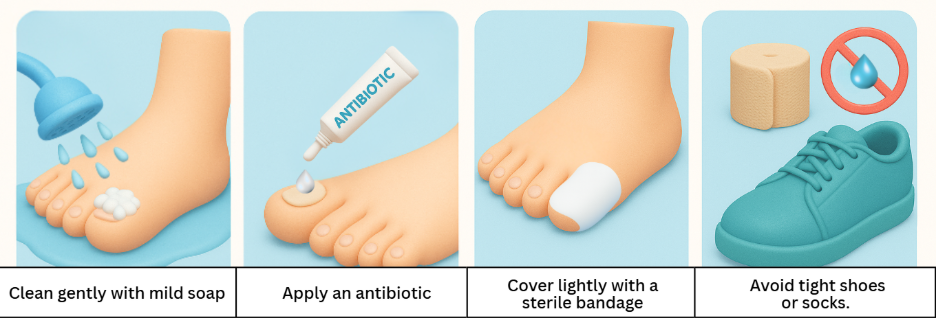
If your toenail has already come off, caring for the area properly can help prevent infection and support new growth:
- Clean gently with mild soap and warm water.
- Apply an antibiotic ointment to reduce bacterial risk.
- Cover lightly with a sterile bandage or gauze.
- Keep it dry and avoid tight shoes or socks.
- Do not force any remaining nail off, it will fall naturally as the new nail grows in.
Toenails typically take 6–12 months to regrow fully. During this time, regular monitoring by a podiatrist helps ensure the new nail grows back healthy and aligned.
When to Call a Podiatrist
Even if it’s painless, toenail loss can sometimes be a sign of an underlying condition that needs treatment. You should see a podiatrist if:
- You have diabetes or poor circulation
- The nail bed looks red, swollen, or has drainage
- The new nail is growing back thick, yellow, or misshapen
- There’s persistent numbness or tingling in your toes
Podiatrists are trained to identify whether nail loss stems from infection, injury, or systemic issues, and can help prevent complications before they start.
Final Thoughts: Why Did My Toenail Fall Off Without Pain?
If you’ve ever wondered why did my toenail fall off without pain, the most likely causes include fungal infections, shoe trauma, skin disorders, circulation issues, or neuropathy.
While the lack of pain might seem reassuring, it’s important not to ignore it, especially if you have diabetes or vascular disease. Painless symptoms are often the body’s quiet way of signaling a need for medical attention.
At Allevio Care Anywhere, we bring expert podiatric care directly to your home, assisted living facility, or care center. Our providers specialize in safe nail care, diabetic foot management, and wound prevention, ensuring early detection and long-term protection for your feet.
Serving Houston, Utah, Southern Idaho, and Nebraska. Schedule your in-home podiatry appointment today.


