


Stubbing your toe, dropping something heavy on your foot, or twisting awkwardly can lead to sudden pain and immediate uncertainty. Many people are left wondering whether they’re dealing with a minor injury or something more serious. The challenge is that a sprained toe and a broken toe can feel very similar in the early stages, yet the treatment and risks can be quite different.
In this guide, we’ll walk through the key differences in a broken vs sprained toe, explain the symptoms that suggest a fracture, and clarify when home care may be appropriate versus when professional podiatric care is essential.
Why Toe Injuries Are Easy to Misjudge
Toes contain small bones, ligaments, tendons, and joints that work together to support balance and movement. When injury occurs, swelling and bruising can make it difficult to tell whether the damage involves soft tissue or bone.
Both sprains and fractures can cause pain, swelling, and difficulty walking, which is why many people struggle to decide whether they have a sprained or fractured toe. Understanding the differences can help prevent delayed healing or long-term joint problems.
What Is a Sprained Toe?
A sprained toe occurs when the ligaments that support a toe joint are overstretched or torn. Ligaments connect bone to bone and help stabilize the joint during movement.
Common Causes of a Sprained Toe
- Sudden twisting or awkward movement
- Stubbing the toe against furniture
- Sports or activity-related strain
- Overextension during a fall
Symptoms of a Sprained Toe
- Mild to moderate pain
- Swelling around the joint
- Bruising that develops gradually
- Stiffness or difficulty bending the toe
- Pain that improves slightly with rest
In many cases, a sprained toe can heal with proper rest and monitoring. However, persistent pain should never be ignored.
What Is a Broken Toe?
A broken toe involves a fracture of one or more toe bones. This can range from a small hairline crack to a complete break where the bone shifts out of alignment.
Common Causes of a Broken Toe
- Dropping a heavy object on the foot
- High-impact trauma or falls
- Repeated stress injuries
- Severe stubbing with force
Symptoms of a Broken Toe
- Sharp or severe pain immediately after injury
- Swelling that worsens over time
- Deep bruising or discoloration
- Pain with any movement or pressure
- Visible deformity or crooked appearance
- Difficulty bearing weight
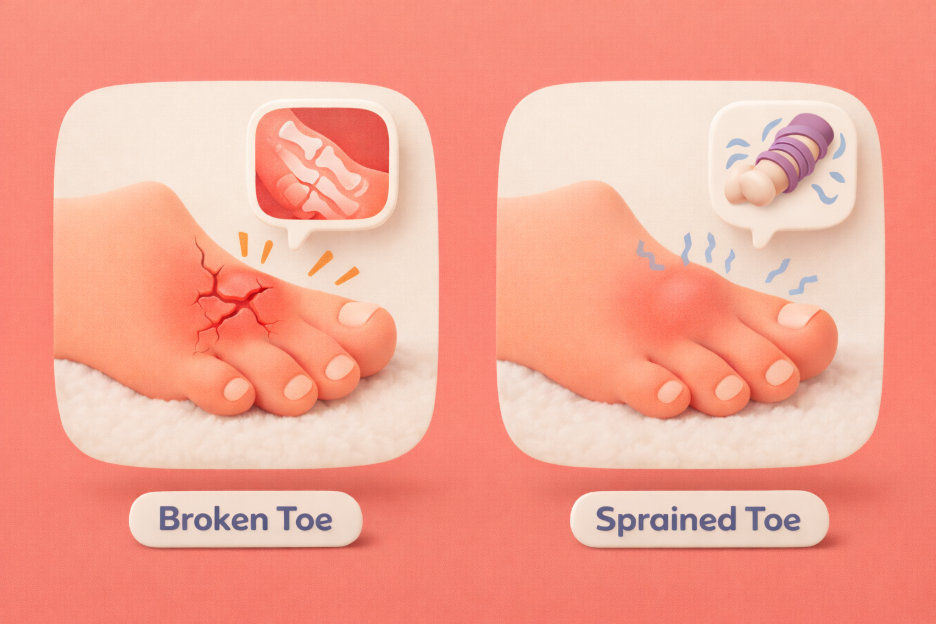
Broken vs. Sprained Toe: Key Differences to Watch For
When comparing a sprained toe and a broken toe, certain signs can help guide your decision to seek medical care.
Pain Pattern
- Sprain: Pain may improve slightly with rest
- Fracture: Pain tends to remain intense or worsen
Swelling and Bruising
- Sprain: Swelling is usually localized and moderate
- Fracture: Swelling is often more severe and widespread
Swelling is often one of the earliest signs of a toe injury, and understanding what causes toe swelling, and when it signals a more serious issue, can help guide next steps in care, as explained in our detailed guide on swollen toes, pain relief, and when to see a doctor.
Movement and Alignment
- Sprain: Toe may move, but movement is painful
- Fracture: Toe may appear crooked or immobile
Weight Bearing
- Sprain: Walking may be uncomfortable but possible
- Fracture: Walking can be very painful or impossible
While these clues are helpful, imaging is often required to definitively diagnose a broken or sprained toe.
When Home Care May Be Enough
In cases where symptoms are mild and improving, conservative care may be appropriate for a sprained toe. This typically includes rest, limited activity, and monitoring symptoms closely.
However, home care should only continue if:
- Pain steadily improves over several days
- Swelling decreases
- No deformity is present
- Walking becomes easier
If symptoms plateau or worsen, professional evaluation is strongly recommended.
When to See a Podiatrist Right Away
You should seek podiatric care if you experience:
- Any toe injury if you have diabetes, poor circulation, or neuropathy
- Severe or worsening pain
- Significant swelling or bruising
- Toe deformity or misalignment
- Numbness or tingling
- Pain that does not improve after a few days
Understanding when expert podiatric care is needed helps ensure injuries are evaluated and treated appropriately, reducing the risk of long-term joint stiffness, chronic pain, and improper healing.
Compassionate Care in the Comfort of Home
If you’re struggling to tell the difference between a broken vs sprained toe, or your pain isn’t improving as expected, scheduling an evaluation can help protect your long-term foot health.
Allevio Care Anywhere provides expert in-home podiatry services, allowing patients to receive thorough evaluation and treatment without the stress of traveling to a clinic. This is especially beneficial for seniors, caregivers, and individuals with mobility limitations. Explore our guide to learn more about how in-home podiatry works.
Schedule an appointment with Allevio Care Anywhere to receive trusted, compassionate podiatric care focused on safe healing and preventing complications, right in the comfort of your home.


